
Gray Blending: A Low-Maintenance Alternative to Covering Your Roots Every Four Weeks
Updated: Jul 28

If you've ever looked in the mirror a few weeks after coloring your hair and thought,
"Here we go again…"
you're not alone.
One of the biggest conversations I have with clients isn't about covering gray hair.
It's about feeling like they're constantly chasing it.
For years, many women have been told there are only two options:
Cover every gray with permanent color every 3–4 weeks…
Or stop coloring altogether and fully embrace the gray.
But what if there was another option?
The truth is, there is.
One that looks natural, feels effortless, is healthier for your hair, and doesn't leave you feeling tied to the salon every month.
What Is Gray Blending?
Gray blending is a customized color technique designed to soften the appearance of gray hair rather than completely hiding it.
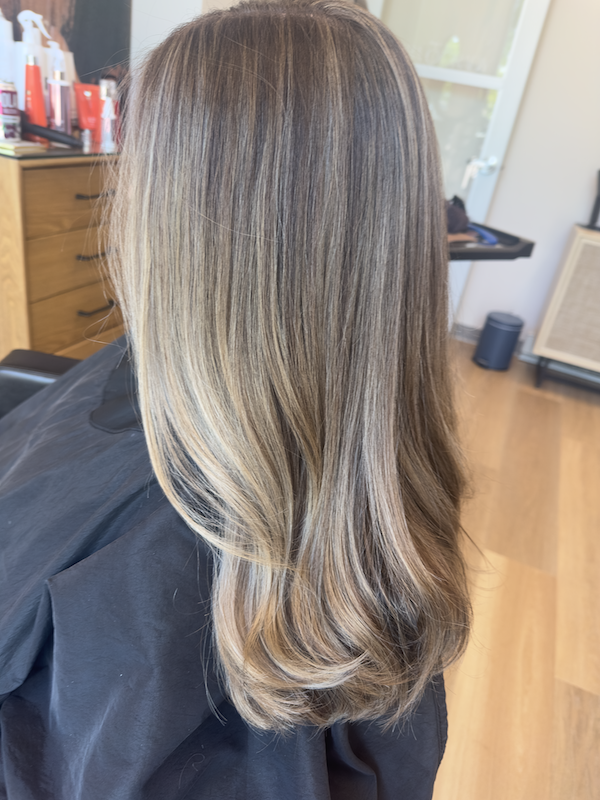
Instead of creating a solid, opaque line of color at your roots, we shift toward a softer, more dimensional approach by combining sheer gray coverage with strategically placed low-maintenance highlights and natural-looking depth.
The result?
A softer grow-out.
Less contrast.
More dimension.
And hair that looks beautiful for weeks—not just the day you leave the salon.
You Don't Have to Choose Between Full Coverage and Going Gray
This is probably my favorite misconception to clear up.
So many women believe their only choices are:
Cover every gray.
Stop coloring completely.
But there is a beautiful middle ground.
By allowing some of your natural gray to become part of the overall look, we can soften those harsh lines of grow-out while still making your hair feel polished, intentional, and vibrant.
You don't have to pretend your gray doesn't exist.
And you certainly don't have to feel like you've "given up."
Instead, we work with your natural beauty—not against it.

Say Goodbye to the "Skunk Stripe"
Let's talk about the part everyone hates.
That harsh line of regrowth that seems to appear almost overnight.
I hear clients joke about their "skunk stripe" all the time, but I know it isn't funny when you're the one looking at it in the mirror.
One of the biggest benefits of gray blending is reducing that obvious line of demarcation.
Instead of a sharp contrast between your natural hair and your color, we create a soft transition using sheer gray coverage, subtle highlights, depth, and dimension.
As your hair grows, the color continues to blend naturally.
Instead of feeling like you're overdue after three or four weeks, many clients are comfortably stretching their appointments to 10 weeks or longer, depending on their individual goals.
Low-Maintenance Highlights That Work With Your Gray
When most people think about highlights, they picture bright blonde streaks.
That's not what I'm talking about.
Low-maintenance highlights are placed intentionally to create movement, softness, and light around the face while helping diffuse gray throughout the hair.
Combined with a customized gray blending formula, these subtle highlights can:
Add natural-looking dimension.
Brighten your overall color.
Create a soft, sun-kissed effect.
Reduce harsh grow-out.
Make gray appear more intentional.
Help you enjoy longer stretches between appointments.
The goal isn't more maintenance.
It's less.
Healthy Hair Always Comes First
One of my core beliefs is that beautiful hair starts with healthy hair.
When you're no longer applying permanent color to every bit of new growth every few weeks, your hair often benefits from:
Less repeated chemical exposure.
Less overlapping color.
Better overall condition.
Stronger, shinier hair.
More flexibility in your long-term color plan.
Healthy hair simply holds color better, feels better, and looks more vibrant.
That's why every color plan I create is designed around both your hair goals and your hair health.
Supporting Healthy Gray Hair at Home
Your hair doesn't stop growing the moment you leave the salon.
What you do at home matters just as much.
That's one of the reasons I love recommending the SEVEN Opti™ system for clients experiencing changes that often come with gray hair, including reduced fullness, increased fragility, and hair that simply doesn't feel as healthy as it once did.
Healthy hair starts at the scalp. When your scalp is cared for and your hair is stronger from the start, your color has a healthier foundation to work with.
Gray blending is only one piece of the puzzle.
Healthy hair care completes it.
Gray Blending Isn't About Looking Younger
This may surprise you.
Most of the women I work with aren't trying to fool anyone into thinking they don't have gray hair.
They simply want hair that feels beautiful.
Hair that reflects who they are today.
Hair that grows out naturally.
Hair that doesn't require planning their calendar around root touch-ups every month.
Gray blending is about enhancing your natural beauty—not hiding it.
Is Gray Blending Right for You?
Gray blending may be a great fit if you:
Want lower-maintenance hair color.
Are tired of coloring your roots every few weeks.
Love soft, natural-looking highlights.
Want healthier hair.
Prefer dimensional, lived-in color.
Want your hair to grow out beautifully.
Like the idea of embracing some gray without going completely gray.
Every head of hair is different, which is why every gray blending plan is customized to your natural color, your gray pattern, your lifestyle, and how much maintenance feels realistic for you.
There is no one-size-fits-all approach.
Frequently Asked Questions
How often will I need appointments?
Many gray blending clients comfortably return every 8–12 weeks, although everyone's hair goals are different.
Will all of my gray hair disappear?
No—and that's intentional. Gray blending softens and diffuses gray instead of creating a solid wall of color.
Can I still look polished without covering every gray?
Absolutely. In fact, many women find they look even more natural because the color grows out so much more softly.
Is gray blending healthier than traditional root color?
Because gray blending often reduces how frequently permanent color is applied and minimizes repeated overlap, it can be a gentler long-term approach for many clients while supporting healthier-looking hair.
Ready to Stop Chasing Your Roots?
If you're looking for a more natural approach to gray coverage, low-maintenance highlights, or gray blending, I'd love to help.
Together, we'll create a color plan that enhances your natural beauty, protects the health of your hair, and fits your lifestyle—not the other way around.
Because beautiful hair shouldn't make you feel like you're chained to the salon every four weeks.
Comments